
Russian Agression and full-scale invasion of Ukraine in 2022 didn’t come out of nowhere. The Kremlin began preparing for war two decades earlier – during a little-known territorial conflict over a small patch of land in the Kerch Strait.
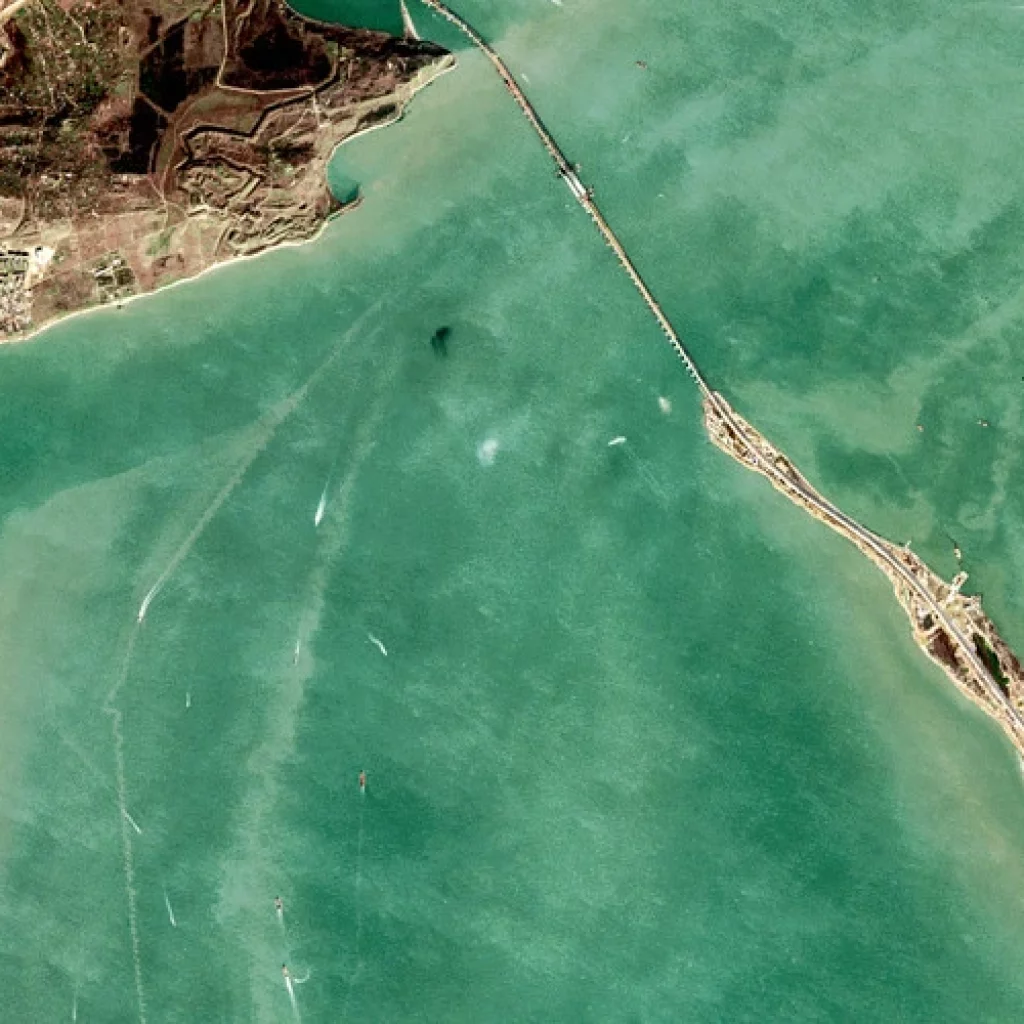
On September 29, 2003, Moscow launched the construction of a dam toward Tuzla Island – Ukrainian territory at the time and still recognized as such under international law. The standoff lasted 25 tense days, from September 29 to October 23, 2003, and became an early rehearsal for Russia’s later aggression in Crimea and Donbas.
A Test Run for Russian Agression and Future Invasions
Plans to seize Ukrainian territory were brewing in Russia long before 2014. In the early 2000s, the Kremlin tested Kyiv’s response – and the world’s reaction – to a potential border violation.
On September 18, 2003, authorities in Russia’s Krasnodar Krai quietly approved what they called a “technical decision” to build a dam across the Kerch Strait. The official explanation: to protect nearby Russian lands from flooding. In reality, the project was a political provocation – a deliberate attempt to question Ukraine’s sovereignty.
At the same time, Russian state media floated “alternative” reasons for the project – economic and even historical – portraying Tuzla as part of Russia’s natural territory.
The Operation Begins
On September 27, Ukrainian border guards noticed a Russian boat approaching Tuzla’s fishing pier. On board were russian NTV television reporters who interviewed locals about their “desire” to join Russia.
Two days later, Moscow began building the dam. Ukraine’s Foreign Ministry sent an immediate note of protest – which Russia ignored.
That same day, the Kremlin’s Security Council held a meeting on “defending state borders” and “clarifying the maritime line” with Ukraine – language that, in practice, meant creating a pretext for sending Russian security forces into the area.
“Three Hundred Spartans”
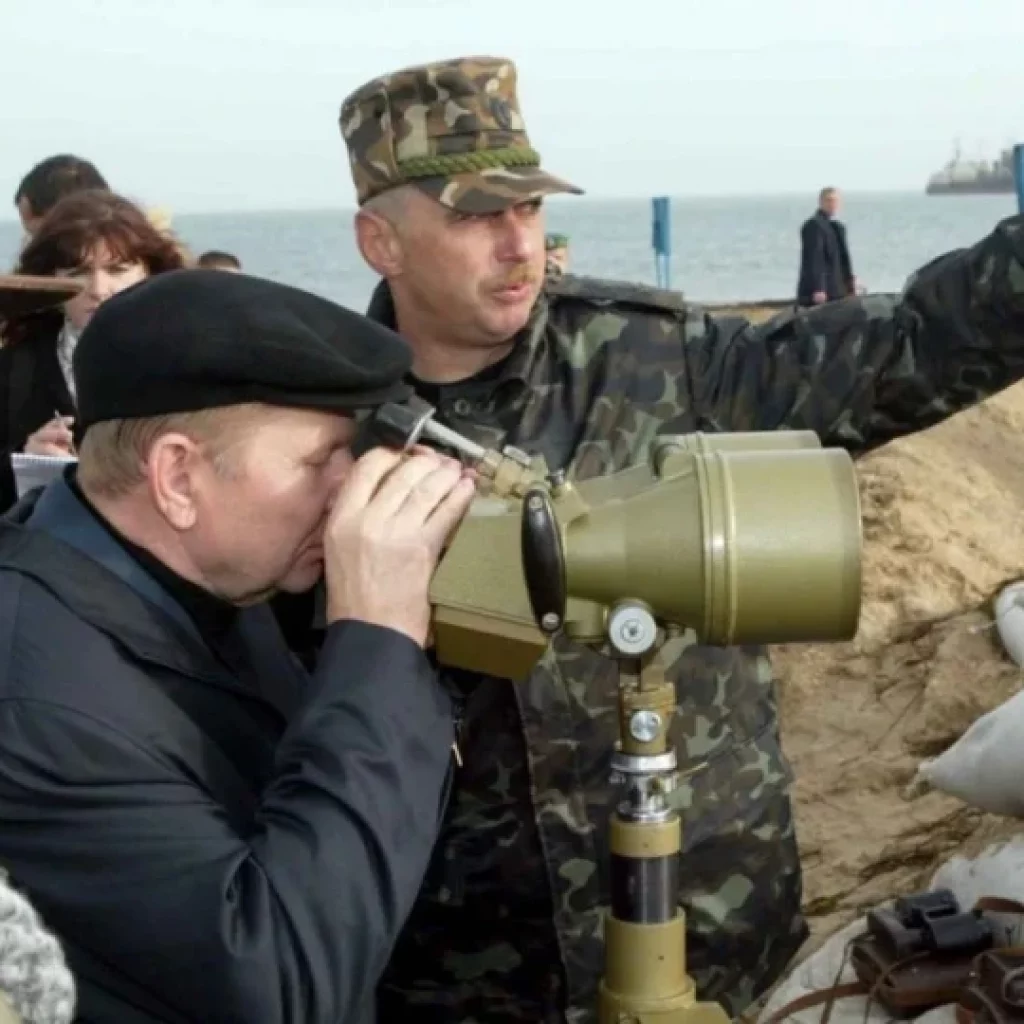
Lieutenant General Mykhailo Koval, then first deputy head of Ukraine’s State Border Guard Service, made a bold decision. Without waiting for orders, he deployed a small force to defend the island – what he called “three hundred Spartans.”
He instructed five regional commanders to each select 30 physically fit men skilled in both hand-to-hand combat and firearms. To avoid panic, the deployment was disguised as a “martial arts competition” in nearby Kerch.
“I acted on my own risk,” Koval later recalled. “There were no orders, but the law on the state border allows us to use weapons to defend it.”
At the time, President Leonid Kuchma was abroad, as were other top officials. When Koval reached out to Viktor Medvedchuk, head of the presidential administration, Medvedchuk reportedly hung up. Left to his own judgment, Koval ordered his men to hold their ground.
Standing This Ground
Russian construction crews worked around the clock. On the Ukrainian side, border guards dug trenches, built fortifications, and positioned machine guns. Five concrete pillboxes were erected.
Ships were dispatched from Balaklava, and helicopters hovered above the strait in shifts to create the illusion of a large air contingent. Armored personnel carriers were camouflaged to look like tanks.
“We understood that if the Russians opened fire from the Kuban side, Tuzla would be wiped out,” recalled Serhiy Kunitsyn, then head of the Crimean government. “But we had to show that this was our land.”
“Tuzla was a litmus test,” Koval said. “Russia tested how strong Ukraine was. If we had swallowed this, Crimea’s annexation would have happened much earlier.”
Diplomatic Pressure and Show of Force
By early October, the Russian dam had stretched nearly 15 kilometers toward Ukrainian territory. Ukraine’s Foreign Minister, Kostyantyn Hryshchenko, rushed to Moscow for emergency talks.
On October 22, Ukraine’s parliament held hearings on relations with Russia, and President Kuchma cut short his trip to Latin America to fly to Tuzla.
That same day, pro-Russian groups in Crimea held a rally in Simferopol, calling for Russia to take not only Tuzla but the entire peninsula. The demonstration was organized by the “Russian Community of Crimea,” “Russian Bloc,” and the Communist Party.
When Russian builders were just 100 meters from Ukrainian defenses on October 23, construction suddenly stopped.
The Turning Point
President Kuchma’s arrival was decisive. He inspected the Ukrainian positions.
“They followed me into a pillbox – the president and Medvedchuk,” General Koval recalled. “They saw machine guns, grenade launchers, soldiers ready to fight. They were stunned.”
Kuchma then stepped aside, called Vladimir Putin, and spoke briefly. When he returned, he told his team: “It’s over. They’ll stop. We’ll negotiate.”
Kuchma later said he had warned Putin that Ukrainian forces were authorized to open fire on any border violators.
By November 2003, both sides agreed to halt construction. A new Ukrainian border post was opened on Tuzla that December. In 2005, Ukraine’s Foreign Ministry announced that Russia had recognized Ukrainian sovereignty over the island – though Moscow continued to insist its legal status was “unclear.”
A decade later, in March 2014, Russia annexed Tuzla along with the rest of Crimea.
The Island That Became a Symbol
Tuzla Island was born out of a storm in 1925, when the sea washed away a narrow spit connecting it to Russia’s Taman Peninsula. Covering just 3 square kilometers, the island was formally transferred from the Russian USSR Republic to the Ukraioe in 1941, and later became part of the Ukrainian Soviet Republic in 1954.
Despite these official Soviet-era documents, Moscow has repeatedly refused to recognize Tuzla as an island, claiming it was part of Russia’s mainland. Some Russian officials even cited pseudo-historical arguments – that sea levels were lower “in ancient times,” making Tuzla “part of Taman.”
In 1997, Russian politician and former KGB graduate Oleksandr Travnikov published a book titled “The Tuzla Spit: A Recounted Territory,” asserting:
“In politics, the small Tuzla Spit in the Kerch Strait is no trifle. It is a matter of principle – defending Russia’s national interests. And principles cannot be negotiated.”
Two decades later, the same principle would drive the Russian Agression to Ukraine – proving that the first shots of this war could easily have been fired in 2003.
Source: vchasno.org.ua, espreso.tv